Electricity in Grenada is supplied by Grenlec, and day-to-day supply in most built-up areas is reasonably dependable. Outages still happen: scheduled maintenance, a vehicle hitting a pole, a tree on a line after heavy rain, faults during electrical storms, and the extended disruption that follows a hurricane or major storm. For a remote worker with a client call at nine, even a forty-minute cut is a problem.
Backup power is a sizing exercise more than a shopping one. The right answer for a freelancer who needs a router and laptop through a short outage is very different from the answer for someone who wants air conditioning running through a day-long cut. Buying a large generator when a small battery would do, or the reverse, is the most common mistake.
This guide explains how to work out what you need, compares the four main options and sets out the practical issues in Grenada, from installation to fuel and noise. Prices vary and change with import costs, so get quotes from more than one supplier.
Work out what you actually need to keep running
Before talking to any supplier, do a simple calculation. Most labels give power in watts; if not, multiply volts by amps.
- List the essentials: laptop, router or fibre terminal, a mobile hotspot, a light and a fan. Leave out air conditioning, kettles and water heaters for now.
- Note the power of each. A laptop typically draws 30 to 90 watts, a router and fibre terminal together around 15 to 30 watts, an LED light under 10, a ceiling fan 50 to 75.
- Add them up. A typical essential home office load is often between 100 and 200 watts.
- Decide how many hours you want to cover. Most outages in normal weather are short; a two to four hour target covers many of them. Multiply load by hours to get watt-hours: 150 watts for 4 hours is 600 watt-hours.
- Add a margin of around a quarter for inverter losses and battery ageing.
- Then decide separately whether you want to run air conditioning or a refrigerator. These loads are much larger and push you towards a substantial inverter system, solar or a generator.
Option one: a UPS for the desk
What it is. An uninterruptible power supply is a battery box that sits under the desk and switches over instantly when the power drops, so the router and monitor stay on without even a flicker.
What it suits. A small UPS rated for a few hundred watts can keep a router and fibre terminal running for an hour or more, which is often enough to finish a call or ride out a short cut. Laptops have their own battery; the critical item is usually the internet equipment.
Limitations. Most affordable UPS units use small lead-acid batteries that last a few years in tropical heat and give limited runtime. They are not designed for long outages.
Placement and care. Heat shortens battery life, so keep the UPS off the floor of a hot room and away from direct sun. Most units beep and display a warning when the battery weakens; replace the battery when that happens rather than discovering it during the next outage.
Tip. Buy one designed for 230-volt, 50-hertz supply, and check that its output sockets match your plugs or that you have suitable leads. Some units also provide surge protection and voltage regulation, which is a useful extra.
Option two: a battery inverter system
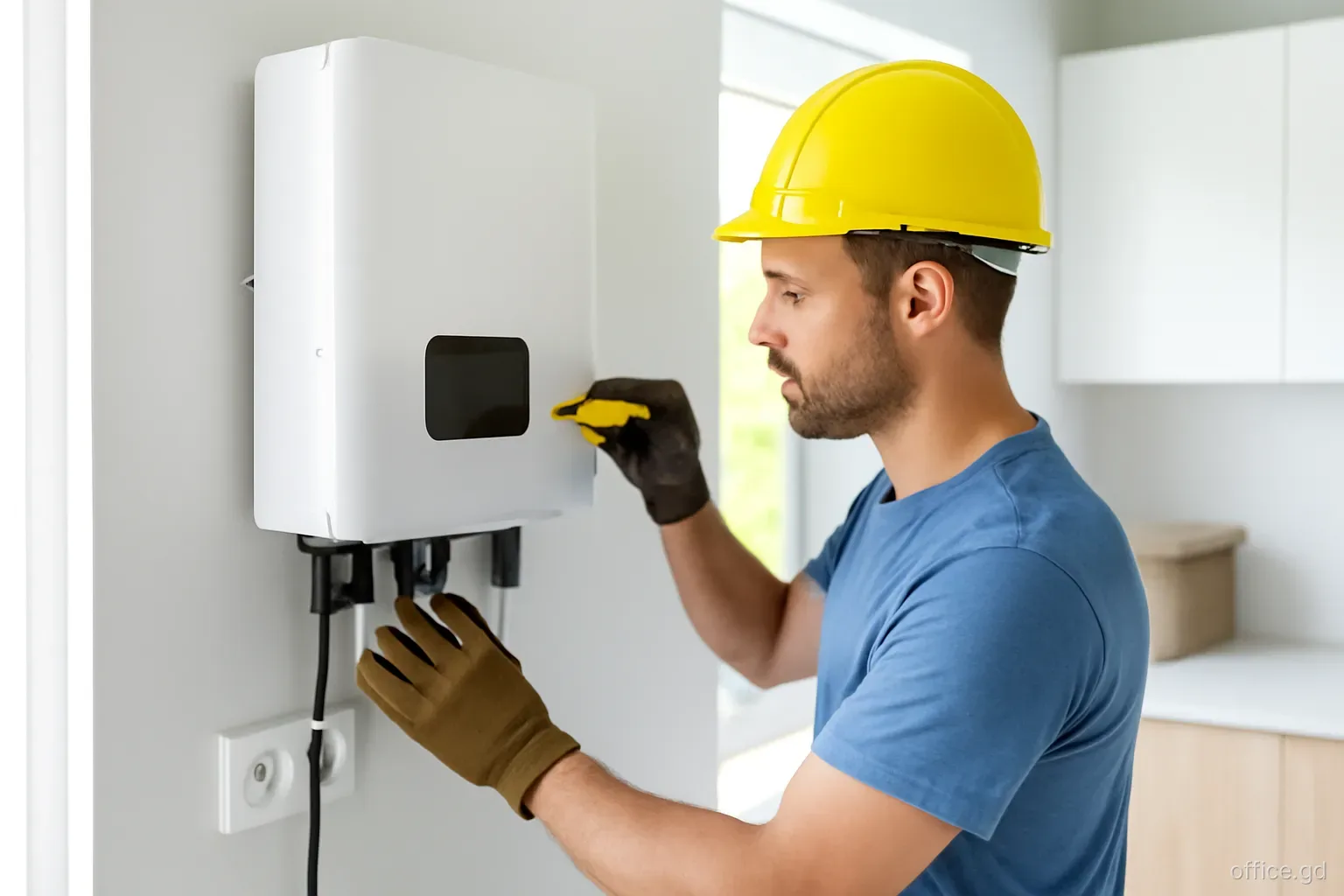
A battery inverter system is a step up: a larger inverter-charger connected to a bank of batteries, wired into a dedicated circuit in the house. When the grid fails, it switches automatically and powers selected sockets and lights, then recharges the batteries when power returns. Systems range from a portable power station on wheels to a wall-mounted unit with a lithium battery serving the whole office and kitchen.
Lithium iron phosphate batteries have become the preferred choice over lead-acid: they last many more cycles, tolerate deeper discharge and are lighter, though they cost more upfront. In Grenada's heat, battery life depends heavily on keeping the batteries in a shaded, ventilated spot, never in a hot shed under a galvanised roof.
For a home office, an inverter system sized at one to two kilowatt-hours of usable storage will run the essentials for many hours. Running air conditioning requires a much larger inverter and battery bank, and is where costs climb steeply.
Have the system installed by a qualified electrician. Wiring into the house circuit must be done properly, with a changeover arrangement that prevents power feeding back into Grenlec's lines during an outage, which endangers utility workers.
Option three: a generator
Generators have long been the standard backup in the Caribbean, and many larger homes, guest houses and businesses in Grenada have one. A petrol or diesel generator can power almost anything, for as long as there is fuel. That makes it the strongest choice for long outages, especially after a hurricane when grid restoration may take days or longer in some areas.
The drawbacks are noise, fumes, fuel storage and maintenance. A generator must run outdoors, well away from windows and doors because of carbon monoxide, and it needs regular test runs and servicing to start reliably when needed. Fuel goes stale if stored for months; plan to rotate it. Neighbours in quiet residential areas will notice a loud machine.
A small inverter generator is quieter and produces cleaner power suitable for electronics, but it supplies less. A standby generator with an automatic transfer switch is the most convenient and the most expensive.
For many remote workers, the most practical combination is a battery system for the frequent short outages and a modest generator, or access to one, for rare long ones.
Option four: solar with batteries
Rooftop solar has become more common in Grenada as panel and battery prices have fallen and electricity prices have stayed high. A solar photovoltaic system with batteries can both cut your electricity bill and keep essentials running during an outage. Without batteries, a standard grid-tied solar system shuts down when the grid fails, for safety reasons, so it provides no backup on its own.
Connecting a system to the grid involves Grenlec and the regulatory framework for self-generation, which has been changing as Grenada reformed its electricity sector. Ask installers and Grenlec about the current interconnection rules and any net billing arrangements before buying, and confirm how long approval takes.
For tenants, a permanent rooftop installation is rarely practical, but a portable power station with folding solar panels can recharge a battery for the office during a long outage.
Hurricane resilience matters. Panels and mounting must be rated and fixed for high winds; ask installers what wind rating they design for and how panels are secured.
Pitfalls and checks before you buy
A few points catch out many first-time buyers in Grenada:
- Check whether the internet will still work in an outage. Your router may run on battery, but the provider's equipment in the neighbourhood also needs power, and in a long, widespread outage fixed lines can go down. Keep a mobile data backup.
- Make sure the inverter output is pure sine wave if it will power sensitive electronics or motors.
- Do not buy batteries that will sit at a low state of charge for months; they deteriorate fast.
- Ask for warranty terms in writing and who services the system locally.
- Keep the generator and fuel secure, and never run it in a garage or enclosed space.
- If renting, agree in writing with the landlord before anything is wired into the house.
- Test the whole setup deliberately once a month by switching off the main breaker for a few minutes, so you know how long it really lasts.
Frequently asked questions
How often does the power go out in Grenada?
In most areas, supply is fairly reliable in normal weather, with occasional short outages from faults, maintenance or storms. Longer and more widespread outages happen after severe weather. Ask neighbours how often power drops in a specific area; reliability varies by location and line.
What size UPS does a home office need?
For a router, fibre terminal and perhaps a monitor, a UPS in the range of several hundred volt-amperes usually gives a useful runtime. Add up the watts of what you want to keep running and check the runtime table published for the model before buying.
Can a battery system run air conditioning?
Yes, but it needs a much larger inverter and battery bank than one for electronics alone. Air conditioners draw far more power than a laptop and router. Many people keep air conditioning off the backup circuit and use a fan during outages instead.
Is solar worth it for a remote worker in Grenada?
It can be, especially for homeowners who plan to stay several years, because electricity costs are high and good sunshine is available all year. Tenants and short-stay workers are usually better served by a battery system or portable power station that can move with them.
Does a generator need approval?
A portable generator used at home generally does not need a permit, but it must be connected safely, with a proper changeover switch if it feeds the house wiring. Large or permanent installations, and anything connected to Grenlec supply, should be handled by a licensed electrician.