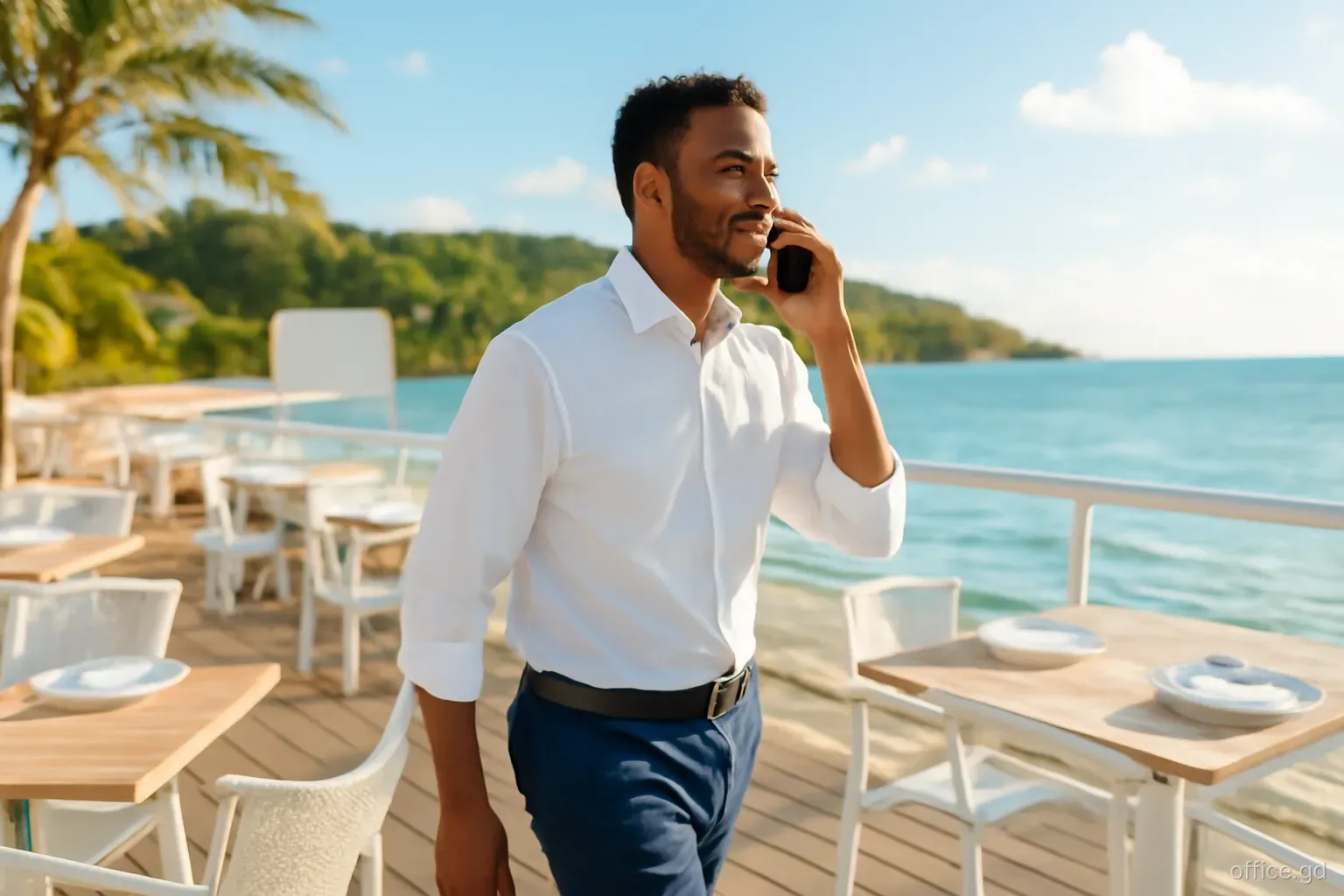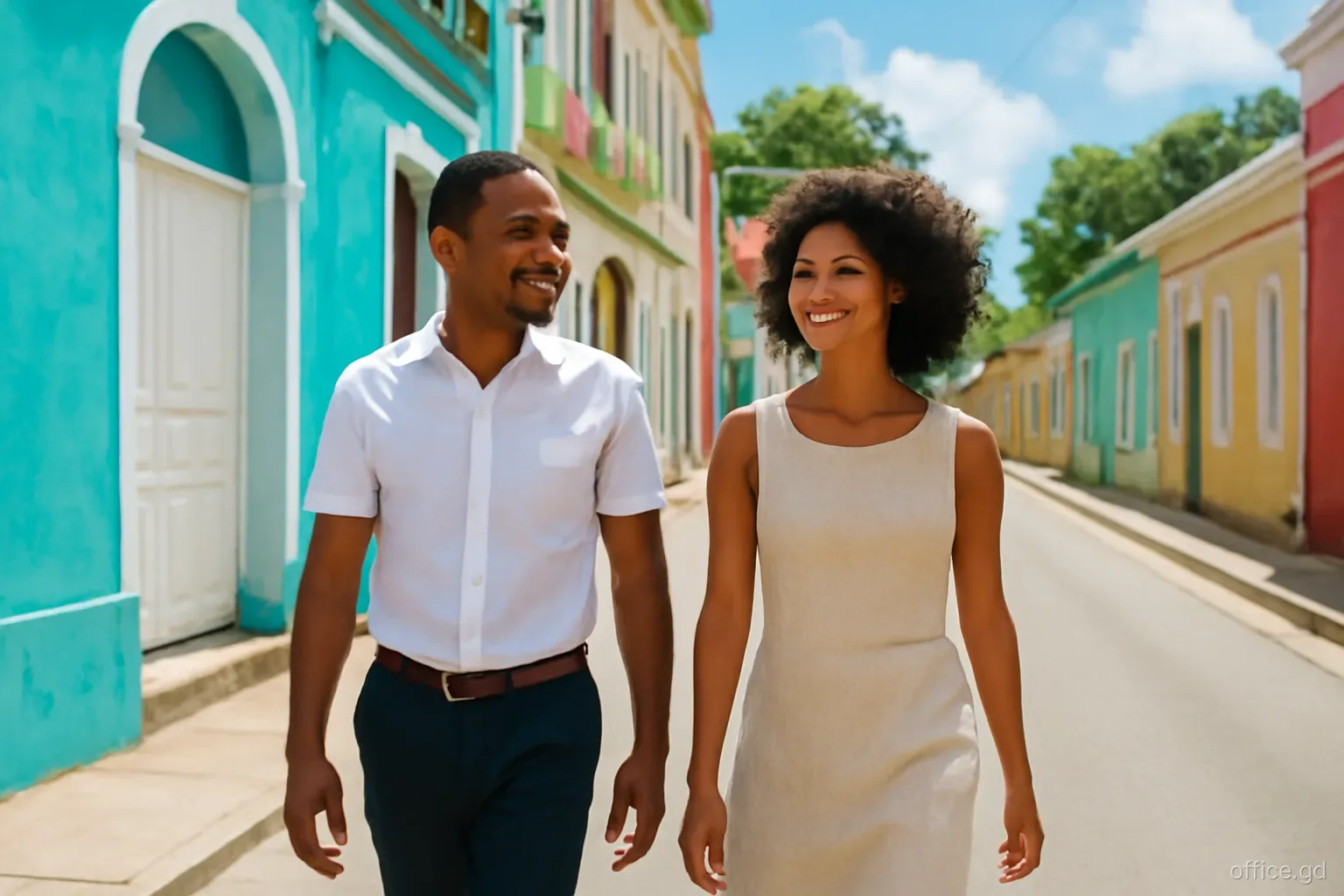
Visitors packing for a business trip to Grenada often assume the dress code will be as relaxed as the beach photographs suggest. It is not. Grenadian professionals generally dress smartly for work, government offices expect modest clothing, and courts and formal events call for full business attire despite temperatures around 30°C for much of the year. Arriving at a ministry in shorts and sandals, or at a bank meeting in a crumpled holiday shirt, signals that you have not taken the occasion seriously.
At the same time, the climate shapes what smart means. Lightweight fabrics, short-sleeved shirts and practical shoes are normal, and jackets are worn selectively rather than all day. This guide sets out what is typically worn in different business settings, how to manage the heat and humidity, and the mistakes that most often make newcomers look out of place.
Setting by setting
Government offices and ministries. Smart casual at minimum: long trousers and a collared shirt for men, a dress, skirt or trousers with covered shoulders for women. Many offices will not admit visitors in beachwear, vests, very short skirts or rubber slippers.
Banks, law firms and accountants. Business wear is the norm among staff. Visitors should match it: a pressed shirt, possibly a tie for a first meeting with senior people, or a smart dress or trouser suit. A jacket is sensible to carry, if not to wear throughout.
Courts and Parliament. Formal business attire is expected. Men typically wear a suit or jacket and tie; women wear suits or conservative dresses. Attorneys wear court dress, and anyone appearing in court should ask their attorney what is appropriate.
Hotels and tourism businesses. Smart casual is usual for meetings at resorts and restaurants, though senior management at larger properties may dress more formally. Resort-wear is fine for leisure, not for a pitch to a general manager.
Site visits and farms. Practical clothing wins: closed shoes or boots, long trousers, a hat and sun protection. Construction sites may require safety footwear and helmets. Bring a change of clothes if you have formal meetings later.
Evening functions. Receptions and dinners range from smart casual to formal. Invitations often state the dress; if not, ask the host. Men frequently wear a long-sleeved shirt without a jacket, while women wear dresses suited to warm evenings.
Dressing for heat and humidity
Grenada is warm all year, with humidity that rises in the wet season from roughly June to November. Choose natural or breathable fabrics: cotton, linen and lightweight blends. Lighter colours reflect heat, though pale linen creases quickly and shows sweat, so many professionals favour crisp cotton shirts and lightweight trousers that hold their shape. Short-sleeved business shirts are widely accepted in Grenada and across the Caribbean, especially for daily office work.
Air conditioning creates the opposite problem. Offices, banks and meeting rooms can be cold, and moving between a chilled office and the midday sun several times a day is tiring. A light jacket, cardigan or wrap helps. Carry a handkerchief or small towel, water and sunscreen, and allow time to cool down before an important meeting if you have walked or waited in the sun. Ironed clothes matter more than expensive ones; a pressed cotton shirt looks more professional than a costly but crumpled suit. Many hotels offer laundry and pressing services, useful on longer trips.
Rain is the other practical factor. Showers in the wet season can be sudden and heavy, and streets in St George's and Grenville can run with water for a few minutes. Shoes that cope with wet pavements, a compact umbrella and a spare shirt in the car or bag can rescue a day of meetings. If you are driving between parishes for appointments, allow for the winding roads and the time it takes to arrive looking composed rather than rushed.
A practical packing list for a business trip
For a week of meetings in St George's, a compact wardrobe covers most situations. Choose pieces that mix and match in neutral colours, so that a single jacket and two pairs of trousers or skirts work with every shirt, and leave space for anything you buy locally:
- Three or four pressed cotton or linen-blend shirts or blouses, including at least one long-sleeved.
- Two pairs of lightweight trousers, skirts or dresses in neutral colours.
- One lightweight jacket or blazer for courts, senior meetings and air-conditioned rooms.
- A tie, for men attending formal meetings or events; many will not need it, but it is useful to have.
- Comfortable closed shoes for meetings and walking, plus practical footwear for site visits.
- A light cardigan, wrap or scarf for cold offices.
- An umbrella or compact rain jacket for sudden showers, which are common in the wet season.
- Sunscreen, sunglasses and a hat for outdoor visits, plus insect repellent for evening events held outdoors or in gardens.
Reading the local cues
Within these general rules, styles vary by sector and organisation. Public servants and bank staff often wear uniforms or a defined office dress, and some offices have a more relaxed day toward the end of the week, sometimes with staff wearing national colours or Caribbean prints. In the weeks before Independence Day on 7 February, red, gold and green appear on clothing in offices and schools. Around Carnival in August, workplaces may hold themed days. Follow the lead of the people you are meeting rather than assuming a casual day applies to visitors.
Local and Caribbean designers produce shirts, dresses and fabrics suited to the climate, and wearing them is generally appreciated rather than seen as costume, provided the overall look remains neat. Modesty matters more than formality in many settings: a simple, tidy outfit with covered shoulders is acceptable almost everywhere, while an expensive but revealing one may not be. Religious and community events, including funerals, which business contacts may invite colleagues to, call for sober, conservative clothing, often in dark colours or white depending on the family's wishes.
Grooming and the overall impression
Presentation is read as a sign of respect for the person you are meeting. Grenadians generally take care with appearance for work, church and formal occasions, and visitors who make the same effort are noticed. Neat hair, clean and polished shoes and tidy accessories carry weight. Strong fragrances can be overpowering in small, warm rooms; keep them light. Visible tattoos and piercings are increasingly common among younger Grenadians, but in conservative settings such as courts and some government offices, discreet presentation is safer.
If you are employing staff, think about what you ask of them. Uniforms or dress guidelines are common in Grenadian businesses, particularly in tourism, retail and finance, and they should be practical for the climate and fair to all employees. Provide uniforms where you require them, and be sensitive to religious dress. Clear, written guidelines prevent misunderstandings, and asking staff for input on practical issues such as fabrics and footwear tends to produce better results than imposing a standard designed for a colder country.
Common mistakes visitors make
None of these will cost a deal on its own, but each sends a signal before you have said a word. They come up repeatedly and are easy to avoid:
- Wearing beachwear, vests, shorts or rubber slippers to government offices, banks or meetings.
- Packing only heavy suits suitable for a temperate climate, then suffering in the heat.
- Assuming that a resort setting means resort clothing for a business meeting.
- Arriving at a formal event underdressed because the invitation did not specify and nobody asked.
- Wearing pale fabrics that show sweat and creases badly after a short walk.
- Forgetting that offices can be very cold, then spending a long meeting uncomfortable.
- Treating national colours or Carnival themes as fancy dress rather than following local colleagues' lead.
- Dressing down for a second meeting because the first felt relaxed; consistency matters, especially with senior people.
Frequently asked questions
Do men need to wear a suit for business meetings in Grenada?
Not usually for routine meetings, where a pressed collared shirt and long trousers are normal, often short-sleeved. A suit or jacket and tie are expected for court, formal events and some first meetings with senior officials or bankers. Carrying a lightweight jacket covers most situations.
Can visitors wear shorts to government offices in Grenada?
It is best not to. Many government offices and courts expect modest clothing and may refuse entry to people in shorts, vests, swimwear or rubber slippers. Long trousers or a skirt and a top with covered shoulders are appropriate.
What should women wear for business in Grenada?
Dresses, skirts or trousers with blouses in light, breathable fabrics are typical, with covered shoulders for government offices and conservative settings. A light jacket or cardigan is useful for air-conditioned rooms and more formal meetings. Closed or smart sandals are fine for most office settings.
Is it acceptable to wear Caribbean prints or local designs to meetings?
Generally yes, provided the outfit is neat and suits the setting. Local designers produce clothing well suited to the climate, and wearing it is often appreciated. For courts or very formal meetings, more conventional business attire is safer.
What is the best fabric for business clothes in the Caribbean?
Breathable natural fabrics such as cotton and linen, or lightweight blends, work best. Linen is cool but creases easily, so many professionals choose crisp cotton or blends that hold their shape. Carry a light layer for air-conditioned offices.